Free, no sign-up, works anywhere in the world
How much sun does your garden get through the day?
A simulation of the real path shadows take across your garden, cast by the buildings, fences and trees around it.
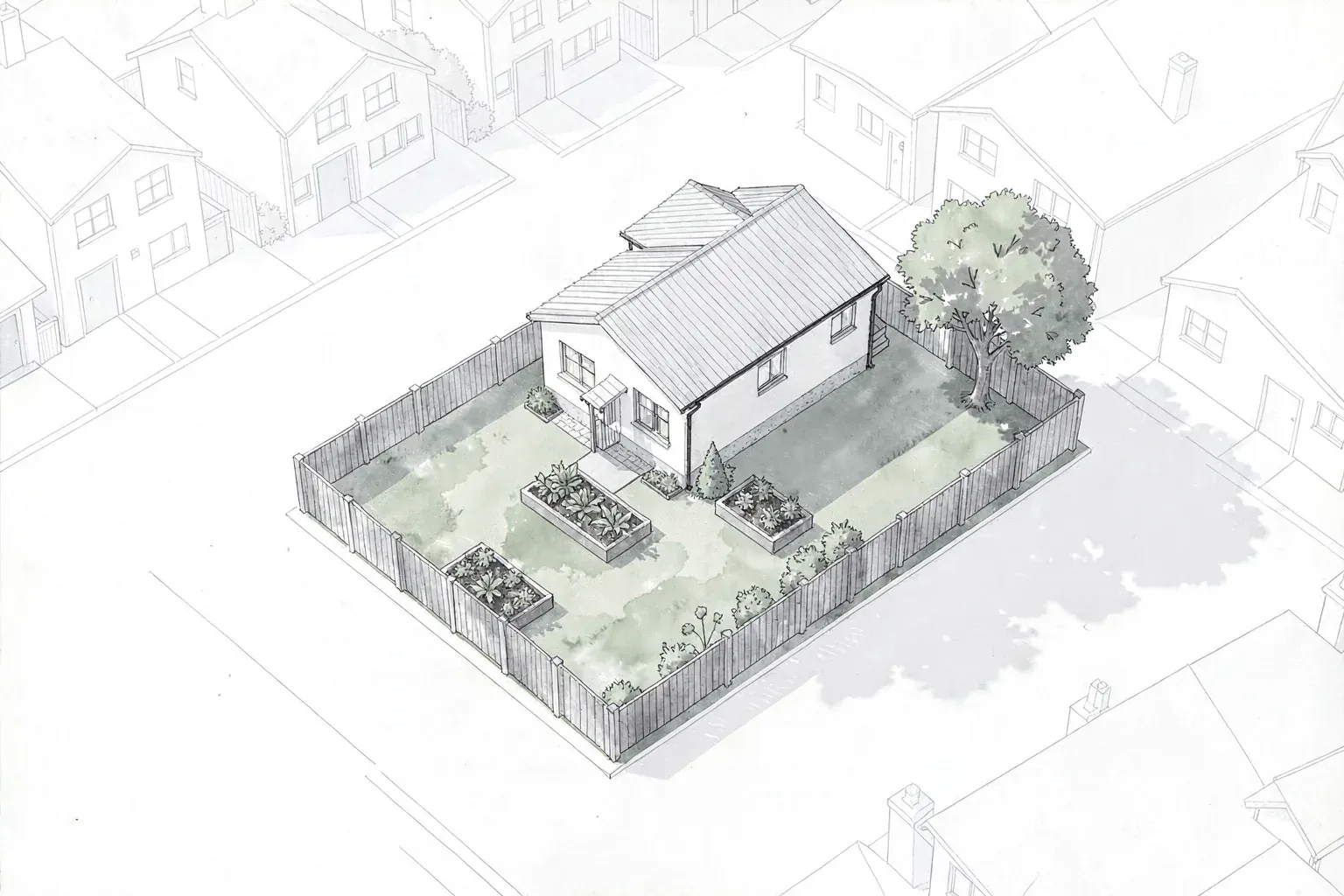
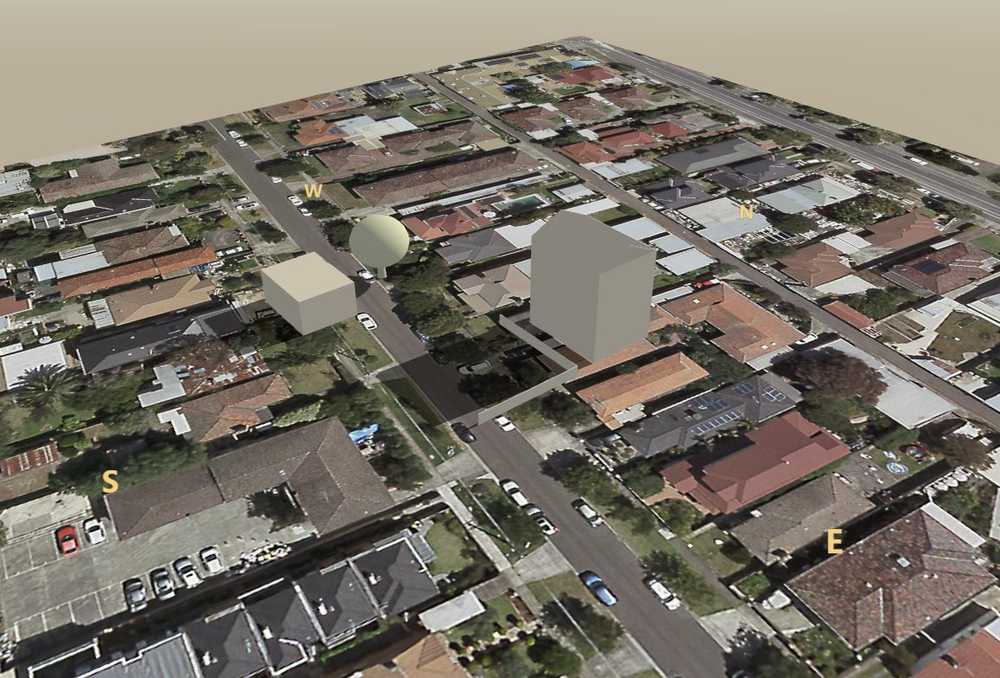
What actually shades a garden
Gardening advice starts with which way your garden faces, and for good reason. A north-facing garden gets the most sun in Australia and the southern hemisphere; a south-facing one does in Europe and North America. But which way a garden faces is not the whole story.
The neighbour's house
A two-storey house on your sunny side blocks more light than any aspect can make up for.
The back fence
A 1.8 metre (6 foot) steel fence can put a whole bed into winter shade without touching it in summer.
One established tree
A single mature canopy can shade half a back garden through an entire afternoon.
The only way to know is to look at your own garden, with the things that are really around it, at the time of year you care about. That is what this tool does.
Worth knowing
Summer is important, but what about winter?
The sun sits far lower in the sky in winter, so shadows stretch six or seven times longer. A bed that bakes in midsummer can sit in shade all day in midwinter. If you are planting something that has to survive the whole year, check it at the winter solstice first.
How it works
Three minutes, and you stop guessing
Type in your address and the planner loads an aerial photograph of your property. You trace what is actually there, then scrub through the day and the year to watch the shadows move.
-
Find your place
An aerial photo loads underneath your address, typically 12 to 30 centimetres — 5 to 12 inches — per pixel depending on where you are, sharp enough to pick out individual garden beds.
-
Trace what is there
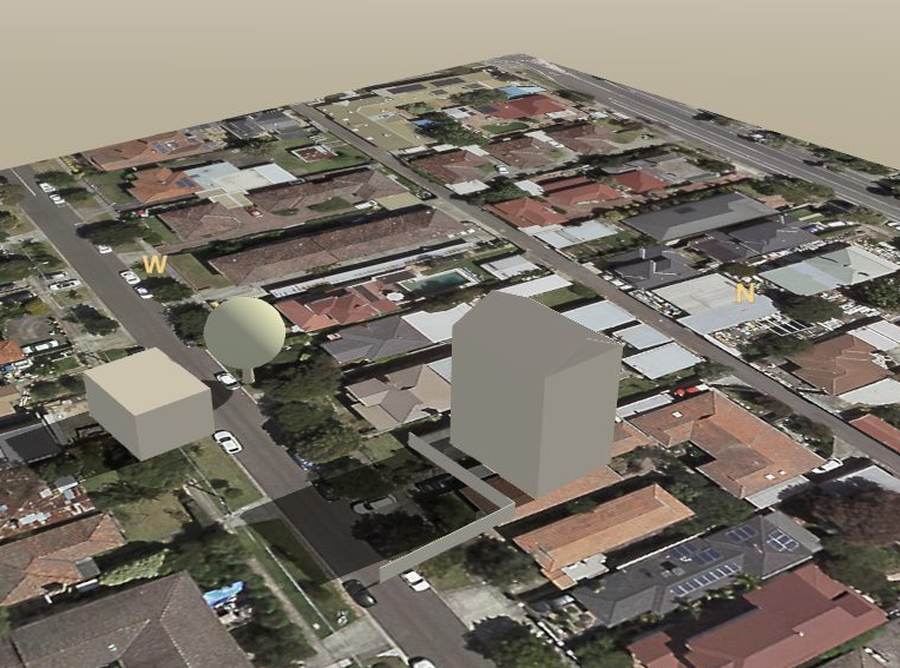
Click around your roof, then your neighbours'. Add fences by clicking along the line, drop a tree with one click, and set each height.
-
Watch the shadows move
Drag the time slider through the day and the year slider between the solstices. Every shadow comes from the real position of the sun for your latitude.
Sun needs
What the labels mean
Plant labels talk about full sun and part shade without saying how many hours that is. Here is the usual scale, and what tends to work in each band.
| Label | Direct sun per day | Typically suits |
|---|---|---|
| Full sun | 6 hours + | Tomatoes, peppers, chillies, eggplant, basil, rosemary, lavender, roses, most fruit trees |
| Part sun / part shade | 4 – 6 hours | Lettuce, rocket, spinach, chard, coriander, peas, strawberries, many herbs |
| Full shade | Under 4 hours | Mint, parsley, ferns, hostas, hellebores, clivia |
Direct sun is what counts — sunlight actually landing on the leaves. A bright spot in open shade is not the same thing.
A note on morning versus afternoon sun
Six hours of morning sun is gentler than six hours of afternoon sun. In hot climates, beds that get sun until about midday and shade afterwards often grow leafy crops better than beds in sun all day, which scorch. The planner shows you which you have, not just how many hours.
Common questions
The things people ask before they trace their first roof.
How many hours of sun counts as full sun?
Six or more hours of direct sunlight a day. Part sun or part shade is roughly four to six hours, and under about four hours is full shade. What matters is direct sun landing on the plant, not general daylight.
Which way should a garden face?
In the southern hemisphere, north-facing gets the most sun. In the northern hemisphere, south-facing. But that rule describes an open site — a fence, a tree or a neighbour's house very often matters more than which way the garden points.
Will a fence shade my vegetable beds?
It depends entirely on the season. In mid-latitudes a standard 1.8 metre (6 foot) fence casts a shadow only about half a metre (under two feet) long at midday in midsummer, but more than three metres (ten feet) at midwinter when the sun sits far lower. A bed close to the shaded side of a fence can be fine all summer and get no direct sun at all in winter.
Does a deciduous tree still count?
Less than you would think in winter, and more than you would think in summer. A bare deciduous canopy still cuts a noticeable amount of light, but nothing like a full one. The planner models canopies as solid, so it shows you the shadiest case — useful for deciding whether a spot works at its worst.
Do I need to know my neighbour's exact house height?
An estimate is enough to be useful. A single-storey house is roughly three metres (ten feet) to the gutters, or four and a half to five and a half (fifteen to eighteen feet) if it sits high off the ground. A two-storey house is usually six to seven (twenty to twenty-three feet). You can set each building's height individually and see how much the answer moves.
Growing guides
Once you know your garden's sun
What to plant by season, what to do when it gets too hot, and which plants are fine with a shady bed.
Spring vegetables
What to plant as the sun climbs back and days lengthen.
Summer vegetables
The classic full-sun crops, and when full sun becomes too much.
Autumn vegetables
What to plant as the sun angle drops and shadows stretch out again.
Beating the heat
Signs of heat stress, when shade cloth helps, and a watering plan.
Shade-tolerant plants
Vegetables, herbs and ornamentals that cope with a shady bed.
See your own garden
Takes a couple of minutes to trace, and you get a close approximation of the real shadows moving across your garden.
Open the sun plannerFree, no sign-up, works anywhere in the world